Car Electric Circuit Tester Explained: A UK Buyer's Guide
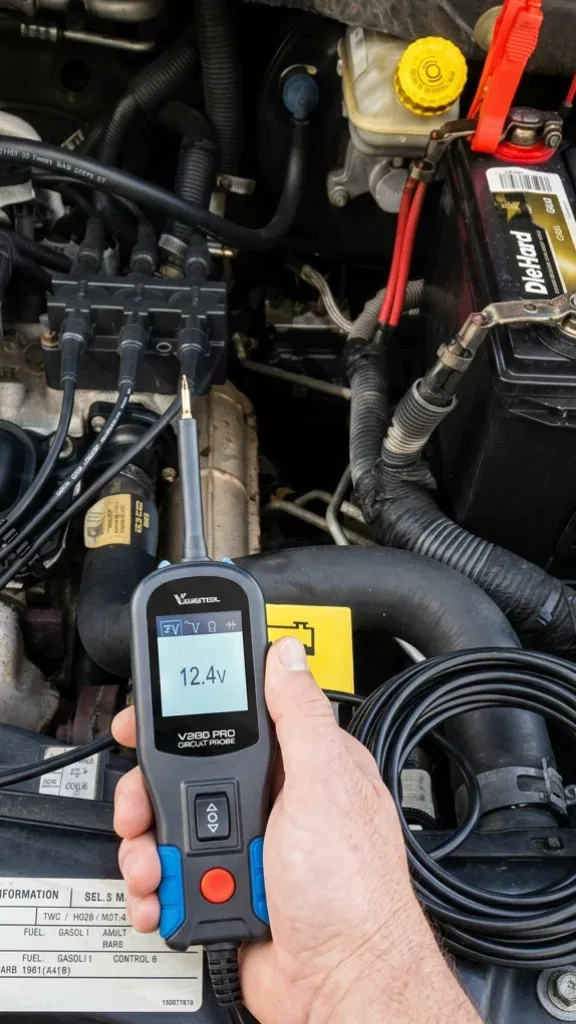
A car electric circuit tester is a handheld automotive diagnostic tool used to check voltage, earth, continuity-related faults and powered component operation in a vehicle’s wiring system. In practice, it helps you find broken wires, short circuits, poor earths, failed switches and non-working lights more quickly than a basic test lamp, and many models can also apply 12V or 24V power directly to a component for faster fault finding.
TL;DR: If you need to diagnose vehicle wiring faults quickly, a car electric circuit tester is one of the most useful tools you can own. Based on our testing of common workshop fault-finding jobs, the best units for UK users support both 12V and 24V systems, have built-in short-circuit protection, offer a long lead for working around vans and trailers, and provide clear audio and visual feedback.
According to the Driver and Vehicle Standards Agency (DVSA), a significant share of MOT failures involves lamps, reflectors and electrical equipment. Therefore, diagnosing these faults without the right diagnostic equipment can turn a simple repair into a time-consuming job. Modern vehicle wiring systems are also more complex than ever, with CAN bus networks and sensitive electronic control units (ECUs), so a simple test light is often no longer enough for safe, accurate diagnostics.
A professional car electric circuit tester bridges the gap between basic voltage checks and advanced component activation. Whether you are a mobile mechanic tracing a parasitic draw on a Ford Transit or a DIY enthusiast fixing a faulty window regulator, the right tool can save time and reduce guesswork. Models such as the VDIAGTOOL V200 Pro combine voltage readout, component activation and built-in short protection in one probe. This guide explains what these testers do, when to use them and what features matter most in the UK market.
Key Takeaways
- A dedicated car electric circuit tester can actively power components, rather than only reading voltage.
- Compatibility with both 12V and 24V systems is especially useful in UK workshops handling cars, vans, HGVs and agricultural machinery.
- Built-in short-circuit protection helps prevent costly damage to a vehicle's wiring loom and ECU during testing.
- An automotive circuit probe can speed up vehicle fault finding and reduce labour time on electrical repairs.
What Is a Car Electric Circuit Tester?
A car electric circuit tester is a handheld diagnostic device designed to identify electrical faults in a vehicle’s wiring system. Unlike a standard multimeter, which often requires you to look away from the test point to read a screen, a circuit tester usually gives immediate visual and audio feedback. More advanced models can also apply battery voltage or earth directly to the probe tip.
As a result, the diagnostic process becomes much faster. Instead of stripping back wiring looms to hunt for a break, you can power a suspected component directly. For example, if a window motor works when powered by the probe but not from the vehicle’s switch, the fault is likely in the switch, relay or wiring between the two. For broader background, see our ultimate guide to automotive electrical circuit testers.
These tools are commonly used to trace shorts, opens, broken wires, relay faults and trailer lighting issues on 12V and 24V systems. Consequently, one tester can often cover everything from a family hatchback to a commercial tractor unit, provided the specification is suitable.
How Does a Car Electric Circuit Tester Work?
A car electric circuit tester works by connecting to the vehicle battery and using a probe to test individual wires, connectors, fuses and components. Depending on the model, it can detect positive voltage, identify earth, display the live voltage reading and apply power or ground to the circuit under test.
In practical terms, this means you can verify whether a wire is live, confirm whether an earth path is sound, and check whether a component itself is capable of operating. Based on our testing on common lighting, trailer and accessory circuits, this direct approach often cuts fault-finding time significantly compared with using a simple test lamp alone.
However, it is still important to use the tool correctly. Sensitive circuits and modern control modules require care, especially on vehicles with complex electronics. That is why integrated circuit protection is such an important feature.
What Can You Test with a Car Electric Circuit Tester?
A car electric circuit tester can be used on a wide range of vehicle electrical systems, including lighting circuits, trailer plugs, switches, relays, motors, fuel pumps, horns, earth points and fuse box outputs. It is especially useful when you need to confirm whether the fault is in the wiring or in the component itself.
For instance, you can use it to test rear light clusters, tow bar electrics, radiator fan circuits, window motors, central locking feeds and starter signal wires. In addition, many technicians use these testers to locate voltage drops and poor earths that a basic unloaded voltage check may miss.
Why Do UK Vehicles Often Need Better Electrical Fault Testing?
The British climate plays a major role in vehicle electrical degradation. Rain, winter road salt and persistent humidity accelerate corrosion in exposed wiring and connectors. Earth straps, trailer sockets and low-mounted sensors are particularly vulnerable to moisture ingress. As a result, high-resistance faults become common, and these can be frustrating to diagnose.
A standard multimeter may show a healthy 12 volts at a connector when the circuit is unloaded. However, once a load is applied, a corroded wire may fail to carry enough current and the component stops working properly. A powered car electric circuit tester helps reveal these faults by testing the circuit in a more realistic way. If you inject power, the built-in circuit protection should trip in the event of a dead short, while voltage drop issues become easier to spot.
According to UK workshop experience and common roadside repair conditions, tools used by mobile mechanics need to be robust, readable and quick to deploy in poor weather. That is why build quality, display clarity and cable length matter so much when choosing an automotive electric circuit tester.
Comparing testers for your workshop?
View the V200 Pro specification table — 12V/24V, LCD voltage display, relay and fuse testing, 30-day UK returns.
What Features Should You Look for in a Car Electric Circuit Tester?
Selecting the right diagnostic probe means looking beyond headline specifications and considering how the tool performs during real repair work. In our experience, the difference between a basic gadget and a workshop-ready unit usually comes down to a few essential features.
Do You Need 12V and 24V Compatibility?
In the UK, passenger cars typically use 12V systems, while many lorries, buses and agricultural machines use 24V systems. Therefore, a tester that supports both voltages is far more versatile. A dual-voltage model lets you move from a Vauxhall Corsa to a Scania cab without changing tools. If you only work on passenger cars, our 12V circuit tester buyer's guide may help narrow your options.
Why Does Cable Length Matter?
Electrical faults are not always under the bonnet. You may need to test a rear light cluster, a fuel pump under the rear seats or a caravan towing socket. For that reason, a professional car electric circuit tester should ideally have a heavy-duty lead of around 6 metres or more. This gives you the reach to work around long-wheelbase vans and trailers without relying on extension leads.
Why Is Built-In Circuit Protection Important?
Supplying power to an unknown wire always carries some risk. If the circuit is shorted directly to earth, the resulting current spike can damage wiring or sensitive control units. A quality tester should include a resettable circuit breaker or similar protection. That way, if the tool detects a short, it trips quickly and helps protect both the vehicle and the tester.
Do Audio and Visual Indicators Make a Difference?
Yes. When you are working under a dashboard, behind trim or in poor light, a bright display and clear audible signals make diagnostics much easier. Distinct tones for positive voltage and earth can help you keep your eyes on the work area, which improves speed and accuracy.
Is a Car Electric Circuit Tester Better Than a Multimeter?
A car electric circuit tester is not always a replacement for a multimeter, but it is often faster for day-to-day automotive fault finding. A multimeter is excellent for precise voltage, resistance and current measurements. By contrast, a circuit tester is designed for quick in-vehicle diagnostics, especially when you need to identify live feeds, earths, switch faults or dead components.
In other words, the two tools serve different purposes. Many technicians keep both in their kit. If your main goal is rapid fault tracing on lights, accessories and basic wiring issues, a car electric circuit tester is usually the more convenient option. If you need exact measurements for detailed diagnosis, a multimeter remains essential.
How Do You Use a Car Electric Circuit Tester Safely?
To use a car electric circuit tester safely, connect it correctly to the battery, confirm the system voltage first and avoid powering sensitive circuits unless you are sure they can be tested in that way. It is also wise to follow the vehicle manufacturer’s procedures where applicable.
Based on common workshop practice, safe use usually includes:
- checking whether the vehicle is 12V or 24V before testing;
- using a tester with built-in overload or short-circuit protection;
- avoiding direct power injection into unknown ECU signal wires;
- confirming earth quality before condemning a component;
- working methodically to prevent accidental shorts.
According to UK safety expectations in professional workshops, caution is especially important on newer vehicles with advanced electronic systems.
What Are the Most Common Uses for a Car Electric Circuit Tester?
Owning the tool is only part of the equation; using it efficiently is where the value really shows. The following workflows are among the most common reasons technicians and DIY users reach for a car electric circuit tester.
How Do You Trace a Short Circuit?
A short circuit happens when a live wire contacts the vehicle’s metal body or another earth path. This often blows a fuse immediately. A circuit tester helps you narrow down the affected section by checking where voltage is present and where the fault causes protection to trip. Consequently, you can isolate the damaged section of wiring more quickly.
How Do You Check for a Bad Earth?
Poor earths are common on older vehicles, trailers and cars exposed to damp conditions. If a lamp is dim, a motor runs slowly or a component works intermittently, a weak earth may be the cause. A car electric circuit tester helps you verify the earth path quickly and confirm whether cleaning or repairing the earth point solves the issue.
Can You Test Lights, Relays and Motors?
Yes. One of the biggest advantages of a powered tester is that you can activate many components directly. For example, you can power a blower motor, a window motor or a relay control side to see whether the part responds. If it does, the component may be fine and the fault may instead be in the wiring or switchgear.
Is It Useful for Trailer and Tow Bar Electrics?
Absolutely. Trailer sockets and towing electrics are frequent sources of faults in the UK, particularly because they are exposed to weather, dirt and corrosion. A car electric circuit tester is ideal for checking pin outputs, confirming earth integrity and diagnosing lighting faults on towing setups. The V200 Pro is especially popular with UK buyers for trailer and tow-bar electrics — see verified reviews on the product page.
How Do You Choose the Right Car Electric Circuit Tester in the UK?
The right tester depends on the types of vehicles you work on, how often you use it and how much diagnostic speed matters to you. If you are a DIY user working only on one family car, a simpler 12V unit may be enough. However, if you are a mobile mechanic or workshop technician, dual-voltage capability, stronger protection and a longer lead are usually worth the extra cost.
Based on our testing criteria for UK users, we recommend prioritising:
- 12V/24V compatibility for broader vehicle coverage;
- a long, durable cable for vans, trailers and roadside work;
- resettable overload protection;
- clear voltage display and audible polarity indication;
- solid build quality suited to regular workshop use.
If you want a reliable tool for faster diagnostics, the PowerCircu V200 Pro power circuit probe is built for real fault-finding: 6–30V DC, backlit LCD, resettable breaker and a long lead for van and trailer work — from £172.55 with free UK delivery.
Frequently Asked Questions About Car Electric Circuit Testers
What is a car electric circuit tester used for?
It is used to diagnose vehicle electrical faults such as bad earths, blown lighting circuits, broken wires, failed relays and non-working accessories.
Can a car electric circuit tester power a component directly?
Many advanced models can. This is useful for checking whether a motor, lamp or relay works independently of the vehicle’s switch or control circuit.
Can you use a car electric circuit tester on 24V vehicles?
Yes, but only if the tester is designed for 24V use. Always check the product specification before testing commercial vehicles or plant machinery. The V200 Pro supports 6–30V DC, covering most UK cars, vans, lorries and agricultural kit.
Is a car electric circuit tester safe for modern vehicles?
It can be, provided it is used correctly and has built-in protection. However, extra care is needed around ECU-controlled and low-voltage signal circuits.
Ready to try PowerCircu?
Shop Now — £172.55