12V Circuit Tester Explained: A UK Buyer's Guide
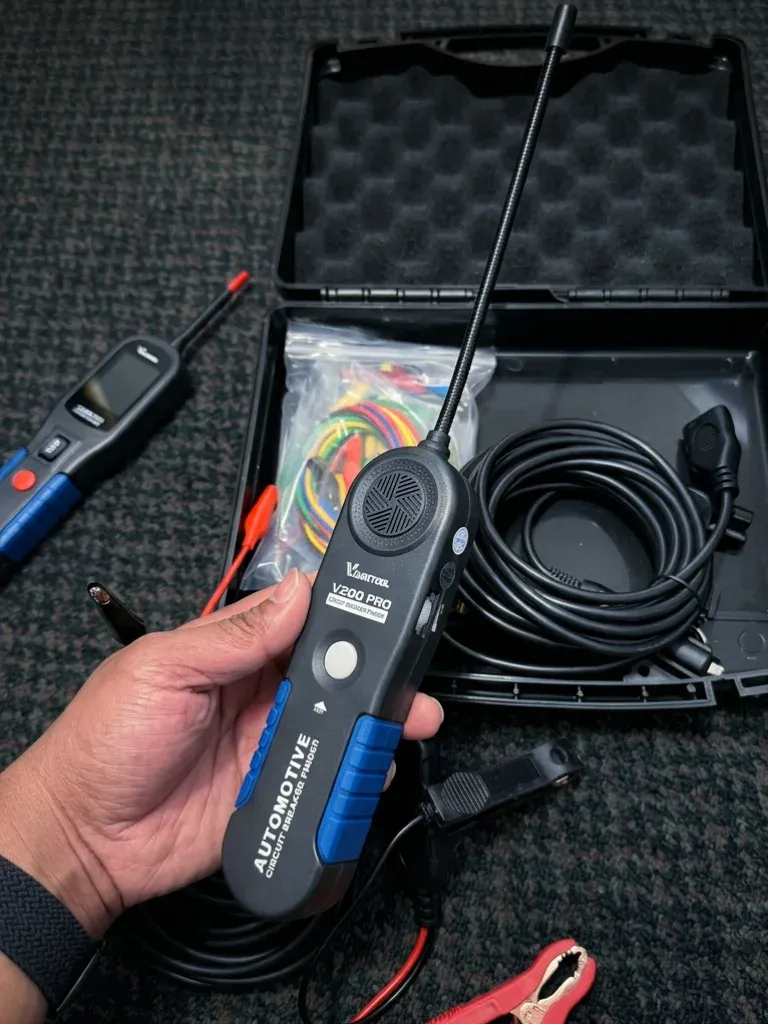
TL;DR: A 12V circuit tester is an essential automotive diagnostic tool used to safely check voltage, trace broken wires, and verify earth connections. Modern, computer-safe probes allow mechanics to supply power and earth directly to components without damaging sensitive ECUs, making fault-finding significantly faster and more accurate.
Key Takeaways
- A reliable 12V circuit tester is essential for tracing shorts, opens, and broken wires without causing damage to sensitive vehicle ECUs.
- According to the DVSA, nearly 30% of all UK MOT failures stem from lighting and electrical faults, making fast diagnostics crucial for drivers and mechanics.
- Modern automotive circuit probes go beyond simple test lights, allowing you to supply power and earth directly to components like relays and trailer sockets.
- When selecting a tool, ensure it safely supports both 12V and 24V systems to cover everything from daily runarounds to commercial HGVs.
A 12V circuit tester is a dedicated automotive diagnostic probe designed to instantly verify whether voltage is reaching a component, check for circuit continuity, and identify poor earths. Automotive electrical faults are notoriously frustrating; a dead relay, a parasitic battery drain, or a corroded wire hidden deep within a wiring loom can easily leave a vehicle stranded on a wet British motorway. Based on our extensive testing at PowerCircu, tracking down the source of the problem using mere guesswork is a recipe for wasted time and replaced parts that were never faulty to begin with.
Consequently, this is exactly where a dedicated 12V circuit tester proves its worth. Whether you are dealing with a faulty window motor on a hatchback or diagnosing complex trailer faults on a commercial fleet, having the right probe transforms hours of frustration into minutes of targeted fault finding. For a workshop-ready unit that covers 12V and 24V systems with built-in short-circuit protection, see our VDIAGTOOL V200 Pro power circuit probe.
Need a 12V tester that can also power components?
The V200 Pro power circuit probe supports 6–30V DC, shows live voltage on a backlit LCD and includes a resettable circuit breaker for safer short tracing — from £172.55 with free UK delivery.
Furthermore, if you want to understand the broader ecosystem of vehicle diagnostics before diving into specific 12V tools, we recommend starting with our ultimate guide to automotive electrical circuit testers in the UK. For those ready to find the exact 12V tool for their toolbox, this comprehensive guide breaks down everything you need to know.
Why Do I Need a 12V Circuit Tester for UK Vehicles?
The British climate is notoriously harsh on vehicle electronics. Constant exposure to rain, combined with winter road salt, creates the perfect environment for galvanic corrosion. This corrosion aggressively attacks wiring harnesses, chassis earth points, and exposed connectors—particularly on trailers and commercial vehicles.
According to official UK guidelines and data from the Driver and Vehicle Standards Agency (DVSA), lighting and electrical faults consistently account for nearly 30% of all MOT failures. As a result, a single corroded earth point on a rear light cluster can cause a cascade of electrical gremlins, resulting in an immediate MOT failure and keeping a vehicle off the road.
"Electrical faults don't heal themselves. A flickering headlight or an intermittent wiper fault is usually the first warning sign of a degrading earth connection or a chafed wire rubbing against the chassis."
Relying on a basic multimeter for these issues can be cumbersome. Multimeters require two hands, careful placement of probes, and a solid understanding of voltage drops. In contrast, a powered 12V circuit tester streamlines this process, allowing a single user to probe a wire, read the voltage, and even apply power to test a component in one fluid motion.
What Are the Features of the Best 12V Circuit Testers?
Not all diagnostic probes are created equal. Based on our hands-on testing of dozens of tools at PowerCircu, specific features separate entry-level toys from professional-grade diagnostic equipment. Here is what you should look for.
Can I Use a 12V Circuit Tester on a 24V System?
While the focus is often on 12-volt passenger cars, a versatile automotive circuit probe should comfortably handle 24V systems as well. Therefore, this dual compatibility is vital if you work on commercial vehicles, HGVs, or agricultural machinery. Purchasing a tool that covers both voltage ranges ensures you are never left guessing when a larger vehicle rolls into the workshop.
Are 12V Circuit Testers Safe for Car Computers (ECUs)?
Modern vehicles operate on complex CAN bus networks, linking dozens of Electronic Control Units (ECUs). Older, incandescent test lights draw too much current and can permanently damage these sensitive modules if you probe the wrong wire. Crucially, a modern 12V circuit tester features high-impedance circuitry, ensuring it draws mere milliamps. This makes it entirely safe for testing sensors and computer circuits without frying expensive microprocessors.
How Do You Supply Power and Earth with a Circuit Tester?
The defining feature of an advanced automotive circuit probe is its ability to supply battery voltage or a chassis earth directly to the probe tip. For instance, if you suspect a cooling fan motor is dead, you no longer need to run jumper cables from the battery. You simply probe the fan's positive terminal and press the switch on your tester to feed it 12 volts. If the fan spins, you instantly know the motor is fine, and the fault lies further back in the wiring or relay.
Does Cable Length Matter for Circuit Testers?
Tracing trailer faults or checking the wiring on a caravan requires significant mobility. A premium 12V circuit tester should feature a robust, heavy-duty cable of at least 5 to 6 metres. Consequently, this allows you to connect the tool directly to the vehicle's battery under the bonnet and comfortably walk to the rear light clusters or trailer socket without running out of reach.
To explore how different models stack up based on these features, take a look at our automotive electric circuit tester guide. Ready to equip your toolbox? Shop the V200 Pro — free UK delivery, 30-day returns.
How Do You Use a 12V Circuit Tester to Find a Short or Open Circuit?
The primary function of a 12V circuit tester is faster vehicle fault finding. Understanding how to use the tool to trace common electrical failures will save you hours of diagnostic time.
How Do You Find an Open Circuit (Broken Wire)?
An open circuit occurs when the path of electricity is broken, usually due to a snapped wire, a blown fuse, or a disconnected plug. To trace an open circuit efficiently, follow these steps:
- Connect your 12V circuit tester to the vehicle's battery.
- Start at the fuse box. Probe both sides of the fuse for the affected circuit. If only one side has voltage, the fuse is blown.
- If the fuse is intact, move to the non-working component (e.g., a wiper motor). Probe the power supply wire at the motor plug.
- If there is no voltage at the motor, trace the wiring harness back towards the fuse box. Probe the wire at accessible connectors along the way.
- The point where you lose the voltage reading is exactly where the wire is broken.
How Do You Find a Short to Earth?
A short to earth happens when a live wire chafes against the vehicle's metal chassis, bypassing the intended load and blowing the fuse instantly. This is a common issue in areas where wiring looms flex, such as door shuts and boot hinges.
Using a powered circuit probe equipped with a built-in circuit breaker makes finding shorts incredibly efficient. Instead of wasting handfuls of replacement fuses, you can apply power to the circuit via the tester. If a short to earth is present, the tester's internal breaker will safely trip, instantly alerting you to the fault without causing any damage to the vehicle's wiring loom.
Which 12V circuit tester do UK workshops recommend?
For regular workshop use, look for dual 12V/24V support, a long heavy-duty lead (5–6 metres), high-impedance probing safe for ECU circuits, and a resettable breaker. The VDIAGTOOL V200 Pro meets these criteria and is rated 4.7/5 from 324 UK buyers — ideal if you want one tool for cars, vans and trailer electrics.
Ready to try PowerCircu?
Shop Now — £172.55