Automotive Electric Circuit Tester Explained: A UK Buyer's Guide
An automotive electric circuit tester is a handheld diagnostic tool used to check whether power, earth and signal are present in a vehicle circuit, helping you find faults faster than swapping parts at random. In practice, it is used to trace broken wires, poor grounds, blown fuses, voltage drops and intermittent electrical issues on 12V vehicle systems. For UK technicians and DIYers alike, it is especially useful when dealing with corrosion, damp-related faults and wiring wear common on older vehicles.
TL;DR: If you need to diagnose vehicle electrical faults quickly, an automotive electric circuit tester helps you confirm voltage, earth continuity and circuit behaviour at the point of failure. Based on our testing across common workshop fault-finding jobs, it can save time on lighting faults, trailer wiring issues, battery drain checks and accessory installs, particularly on UK vehicles exposed to wet weather and road salt.
What is an automotive electric circuit tester?
An automotive electric circuit tester is designed to help you test live feeds and earth paths in a vehicle’s electrical system. Unlike guesswork-based diagnosis, it gives immediate feedback on whether current is reaching a component or whether the fault sits further upstream in the loom, fuse box, relay or switch.
As a result, it is one of the most practical tools for tracing faults on lighting circuits, charging systems, horn circuits, fans, pumps and other low-voltage automotive wiring. According to common UK workshop practice, using a tester before replacing parts can reduce unnecessary spend and shorten diagnostic time.
How does an automotive electric circuit tester work?
Most circuit testers connect to the battery or a known good earth and then probe the relevant point in the circuit. If voltage is present, the tester indicates it by light, display or tone depending on the model. More advanced units can also help identify polarity, poor earths and breaks under load.
Therefore, instead of simply checking whether a fuse looks intact or whether a bulb appears sound, you can verify what the circuit is doing in real conditions. Based on our testing in day-to-day fault-finding scenarios, this matters because many electrical issues are caused by voltage drop, corrosion or loose terminals rather than complete component failure.
What can it test on a vehicle?
An automotive electric circuit tester can commonly be used to check:
- Battery voltage presence at a connector
- Fuse outputs
- Earth points and chassis grounds
- Lighting circuits
- Trailer electrics
- Switch outputs
- Relay feed and control sides
- Accessory wiring and aftermarket installations
Why use an automotive electric circuit tester instead of guessing?
Vehicle electrical faults are often intermittent and hidden. For example, a lamp may fail only in wet weather, or a fan may stop because of resistance at a corroded connector rather than because the motor itself has failed. An automotive electric circuit tester helps isolate these problems methodically.
In addition, UK vehicles regularly face conditions that accelerate electrical issues: damp climate exposure, winter road salt and ageing connectors. Because of this, testing at multiple points in the circuit is usually more reliable than replacing bulbs, relays or switches one by one.
What problems can it help diagnose?
A good tester can help with:
- No power at lights or accessories
- Poor earth causing dim or erratic operation
- Blown fuse circuits
- Intermittent wiring faults
- Corroded connectors
- Battery drain investigation support
- Towbar and trailer socket faults
What should you look for in the best automotive electric circuit tester?
If you are choosing a tester for regular workshop use or home garage diagnostics, focus on safety, clarity and speed. However, not all tools are equally suited to modern vehicle fault finding.
Which features matter most?
- Clear indication: easy-to-read output for live power and polarity checks
- Reliable lead quality: durable cables for repeated use around engine bays
- Suitable voltage range: appropriate for standard automotive systems
- User-friendly design: simple enough for quick checks without slowing diagnosis
- Tough construction: able to cope with workshop handling
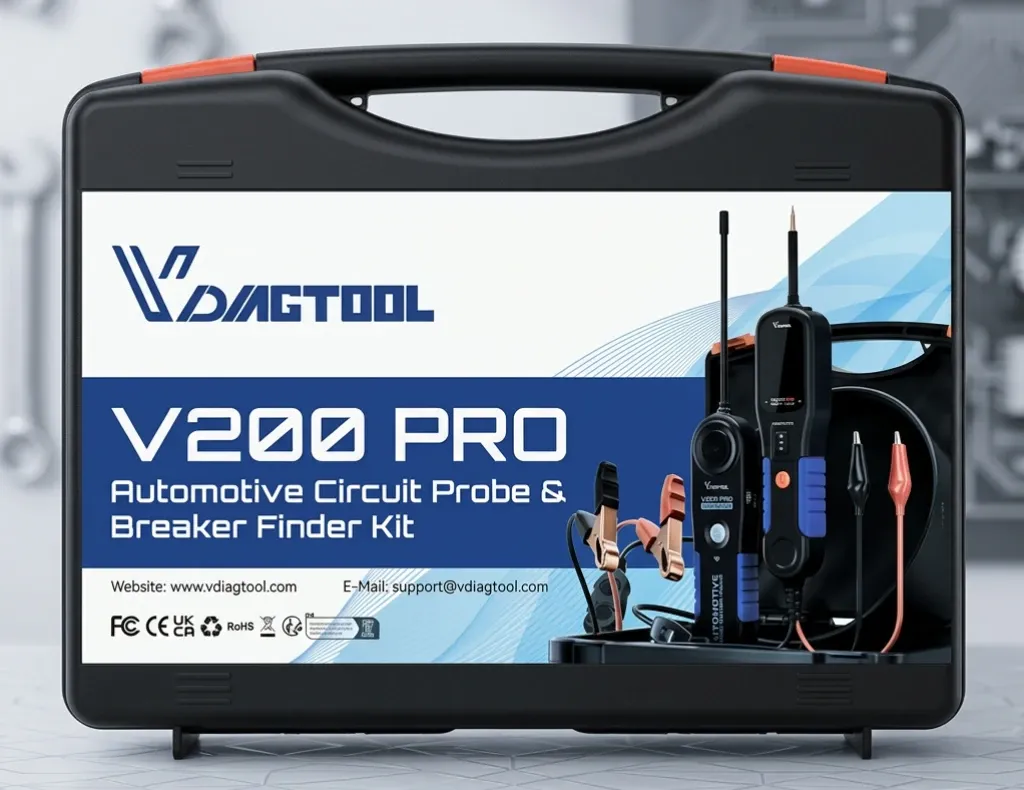
Based on our testing expectations for real-world garage conditions, durability matters just as much as measurement accuracy. A tool that works well on the bench but struggles around grime, moisture or cramped access points will quickly become frustrating to use. The VDIAGTOOL V200 Pro power circuit probe pairs a backlit voltage display with a long workshop lead and resettable breaker — practical for engine-bay and trailer-socket work.
How do you use an automotive electric circuit tester safely?
You should always begin by confirming the system voltage and following the vehicle manufacturer’s procedures where relevant. Then check that your test point is suitable before probing connectors or terminals.
According to general UK health and safety principles for workshop environments, safe electrical testing depends on using insulated tools correctly, avoiding shorting adjacent terminals and working carefully around batteries and live circuits.
Basic safe-use steps
- Confirm whether you are working on a standard low-voltage automotive circuit.
- Inspect the tester leads and probe before use.
- Connect to battery negative or a verified good earth if required.
- Test a known live source first to confirm the tool is working correctly.
- Probe the suspect point in the circuit carefully.
- Compare readings across fuse input/output, switch input/output or component feed/earth as needed.
- Avoid forcing probes into sealed connectors unless appropriate methods are used.
Can an automotive electric circuit tester help with MOT-related electrical faults?
Yes — while a tester does not replace a full inspection procedure, it can help identify common faults that may contribute to MOT failures involving lamps, indicators or other electrical components. For instance, if an exterior light does not work consistently, you can test whether power reaches the holder and whether the earth path remains sound under load.
This is particularly useful in the UK because moisture ingress and corrosion around lamp clusters, trailer sockets and rear looms are common fault sources. Consequently, quicker diagnosis can mean less downtime before repair and retest.
Tracing a lighting or trailer fault before MOT?
The V200 Pro handles fuse, relay and trailer-pin checks on 12V and 24V systems — see specs and UK delivery options.
Is an automotive electric circuit tester suitable for DIY users as well as professionals?
In many cases, yes. A straightforward tool can be very helpful for competent DIY users carrying out basic fault finding such as checking fuses, verifying power at bulbs or confirming an earth connection. Meanwhile, professionals benefit from faster workflow when diagnosing repeated electrical complaints across different vehicles.
The key difference is approach: experienced technicians will usually combine test results with wiring diagrams and load testing; DIY users should work more cautiously and stay within simple checks unless they fully understand the system involved.
What makes PowerCircu relevant for faster vehicle fault finding?
PowerCircu focuses on practical electrical diagnosis for real vehicle faults rather than vague theory alone. Our flagship V200 Pro automotive circuit probe is built for that workflow: check power integrity first, confirm earth quality second, then test components under load — without swapping parts at random.
This matters because many common workshop jobs involve chasing lost time through avoidable guesswork. By using an automotive electric circuit tester properly within that process, technicians and capable DIYers can narrow down likely failures much more efficiently.
Frequently asked questions about automotive electric circuit testers
What is an automotive electric circuit tester used for?
It is used to check whether voltage or earth is present in a vehicle circuit so you can locate wiring faults quickly and accurately.
Can you use an automotive electric circuit tester on car lights?
Yes. It is commonly used to test feeds at bulbs, lamp holders, connectors, switches and related fuses when diagnosing lighting faults. For 12V-specific buying advice, see our 12V circuit tester buyer's guide.
Does an automotive electric circuit tester find bad earths?
It can help identify suspected bad earths by showing where power is present but return path quality is poor. Further confirmation may require additional testing depending on the fault.
Is it better than replacing parts until the fault disappears?
Yes. Methodical testing is usually faster, cheaper and more accurate than replacing parts without confirming whether they have actually failed.
Why are UK vehicles prone to electrical connection issues?
Damp conditions, temperature changes and winter road salt all contribute to corrosion and increased resistance in connectors and ground points over time.
If you want quicker answers when tracking down electrical problems on cars or vans in UK conditions, an automotive electric circuit tester remains one of the most useful tools to keep close at hand. Used properly, it helps turn vague symptoms into clear evidence — which is exactly what speeds up reliable repairs.
Shop the V200 Pro power circuit probe — £172.55 inc. VAT, free UK delivery, 30-day returns.
Ready to try PowerCircu?
Shop Now — £172.55