The Ultimate Guide to Automotive Electrical Circuit Tester in the UK
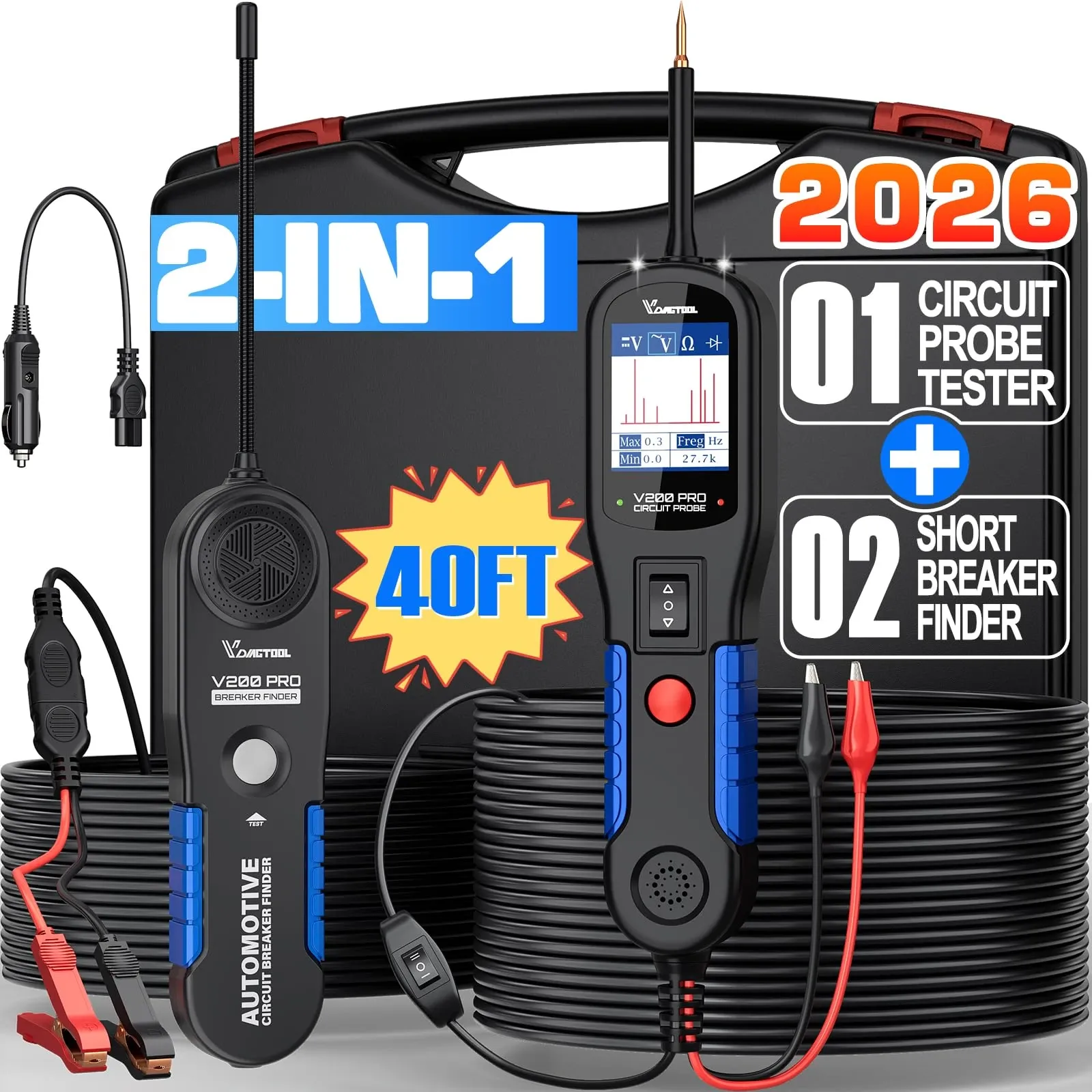
An automotive electrical circuit tester is a handheld diagnostic tool used to check voltage, earth, continuity, shorts, opens, fuses, relays and wiring faults in vehicle electrical systems. For UK mechanics and DIY vehicle owners, it helps speed up fault-finding on cars, vans, trailers and some 24V commercial systems without unnecessary parts swapping.
TL;DR: If you need to diagnose blown fuses, dead lights, poor earths, broken wires, relay faults or trailer socket issues, an automotive electrical circuit tester is one of the quickest tools to use. Based on our testing across common 12V vehicle faults, it can dramatically reduce diagnostic time when used correctly and safely, especially on lighting, charging, accessory and wiring problems.
Electrical faults are rarely convenient. One minute it is a number plate lamp, the next it is an intermittent brake light, a dead towbar socket, or a fuse that keeps failing in wet weather. In the UK, where damp, corrosion and salted roads regularly affect wiring and connectors, a reliable automotive electrical circuit tester can save a great deal of time.
At PowerCircu, we focus on faster vehicle fault finding. That means practical diagnosis, not guesswork. According to UK workshop best practice, the fastest route to a repair is usually to confirm power, confirm earth, then isolate the fault in the circuit. Therefore, this guide explains what an automotive electrical circuit tester does, how to use one safely, and which faults it helps you find faster.
What is an automotive electrical circuit tester?
An automotive electrical circuit tester is a diagnostic tool designed to check whether electrical power is present in a vehicle circuit and whether that circuit has a sound earth path. Depending on the model, it may also help you trace shorts, identify open circuits, activate components, test polarity and verify continuity.
In simple terms, it tells you what the circuit is doing. Instead of replacing bulbs, relays or switches on a hunch, you can test the circuit first and make a better repair decision.
For example, if a rear fog lamp does not work, a tester can help you confirm whether the problem is:
- a blown fuse,
- no feed from the switch,
- a corroded connector,
- a broken wire in the loom, or
- a bad earth near the lamp unit.
That is why this tool is so useful in real workshop conditions.
What does an automotive electrical circuit tester do?
An automotive electrical circuit tester is used to diagnose common vehicle electrical faults quickly and methodically. Although exact features vary, most testers are used for the following jobs:
Can it test for voltage?
Yes. First and foremost, it checks whether a circuit has live voltage. This is useful when diagnosing lighting circuits, horn faults, wiper feeds, heater blower faults and accessory issues.
Can it check an earth fault?
Yes. Poor earthing is one of the most common causes of intermittent faults, dim lamps and strange electrical behaviour. Therefore, checking earth quality is often one of the first tests worth doing.
Can it help find a broken wire?
Yes. If power is present at one point in the circuit but not further along, the tester helps narrow down where the open circuit begins. Based on our testing on damaged tailgate looms and trailer wiring, this is one of the most time-saving uses.
Can it help trace a short circuit?
Yes, in many cases. If a fuse repeatedly blows, the tester can help isolate where the feed is contacting earth or where insulation has failed, especially in high-movement areas such as boot lids, doors and towbar wiring routes.
Can it test fuses and relays?
Yes. It can quickly confirm whether a fuse has supply on both sides and whether a relay is receiving command voltage and outputting power correctly.
Can it check trailer electrics?
Absolutely. In the UK, trailer faults are common, especially with 7-pin and 13-pin socket corrosion. A tester can help verify feeds for indicators, tail lamps, brake lamps, fog lamps and reverse lamps where fitted.
Why is an automotive electrical circuit tester useful for UK vehicles?
UK vehicles face a few predictable electrical challenges. Firstly, moisture ingress is common. Secondly, road salt accelerates corrosion in connectors, earth points and exposed trailer sockets. Thirdly, many faults are intermittent, which makes guesswork expensive and frustrating.
According to UK roadworthiness expectations and MOT-related repair practice, lighting, signalling and electrical safety faults must be identified accurately before the vehicle goes back on the road. Therefore, a circuit tester is not just convenient; it is often the quickest way to confirm a road-legal repair.
According to UK workshop experience, common UK-specific fault areas include:
- corroded rear lamp connectors,
- towbar electrics and trailer sockets,
- broken wires in tailgates and van rear doors,
- water ingress in fuse boxes and body control areas,
- earth strap corrosion, and
- lighting faults that lead to MOT failure items.
As a result, a good tester becomes useful on everything from family hatchbacks to vans and light commercial vehicles.
How do you use an automotive electrical circuit tester safely?
You should always use an automotive electrical circuit tester carefully, because modern vehicles contain sensitive electronics. Although the tool is straightforward, correct technique matters.
Connect the earth properly
Start with a known good earth point. If your ground connection is poor, your readings can mislead you. Therefore, it is worth confirming your earth point before testing the circuit itself.
Use the correct voltage range
Most passenger vehicles are 12V, while many commercial vehicles use 24V systems. Check the vehicle before testing, particularly on vans, HGV-related equipment and mixed fleet applications.
Avoid airbag and safety restraint circuits
Do not probe airbag, pretensioner or other supplementary restraint system wiring unless the manufacturer procedure specifically allows it. These systems require caution and correct isolation methods.
Be careful around ECUs and data networks
On modern vehicles, not every wire should be power-probed casually. CAN bus and control circuits can be sensitive. Therefore, where possible, follow the wiring diagram and use the correct test method for the circuit type.
Inspect before you probe
Before testing, look for obvious damage, green corrosion, trapped wiring, poor previous repairs or moisture ingress. Very often, the visual clue saves time.
Work methodically
Rather than jumping from component to component, test in order:
- check the fuse,
- confirm power feed,
- confirm earth,
- test the switch or relay,
- then move along the circuit until the fault is located.
Based on our testing, this is consistently faster than replacing parts speculatively.
What can you test with an automotive electrical circuit tester?
An automotive electrical circuit tester is useful on a wide range of vehicle systems. However, the exact jobs depend on the tester design and the vehicle system involved.
Lighting circuits
Headlamps, side lamps, brake lamps, indicators, number plate lights, reversing lamps and rear fog lamps are all common testing jobs. These circuits are often simple enough to diagnose quickly.
Fuses and fuse boxes
You can check whether a fuse is live on both sides, whether power is reaching the fuse box, and whether a downstream circuit is drawing or failing correctly.
Relays and switched circuits
Relays for cooling fans, heated rear windows, fuel pumps and auxiliary circuits can all be checked for command input and switched output.
Battery and charging-related feeds
Although a dedicated multimeter is still valuable, a circuit tester can quickly confirm whether charging or ignition feeds are present where expected.
Accessory circuits
Faults with 12V sockets, interior lights, aftermarket accessories, reversing cameras, dash cams and towbar wiring are common and usually straightforward to test.
Trailer and caravan electrics
For UK users, this is a major one. Testing 7-pin and 13-pin sockets, adapter wiring and trailer lamp feeds is a frequent use case, especially before towing.
For related reading, see: 12V circuit tester explained, automotive electric circuit tester guide, and car electric circuit tester guide.
How do you diagnose a car wiring fault with an automotive electrical circuit tester?
The fastest way to diagnose a wiring fault is to follow the circuit logically. In other words, do not start by blaming the component. Start by proving whether the circuit can supply and return current properly.
Step 1: Confirm the complaint
Check exactly what does and does not work. For example, if one rear lamp function works but another does not, the fault may be local to the lamp unit, connector or earth.
Step 2: Check the fuse first
If there is no power at the fuse, the issue is upstream. If there is power on one side of the fuse only, the fuse is likely blown. If both sides are live, move downstream.
Step 3: Test at the load
Probe the component feed. If power is present but the component does not operate, check the earth next. Many faults are caused by poor earth rather than missing supply.
Step 4: Split the circuit in half
If power is missing at the component, test midway between the fuse and the load. Then keep narrowing the fault area. This saves time compared with checking every inch of wiring.
Step 5: Wiggle-test intermittent sections
Where appropriate, gently move suspect wiring looms while observing the test result. Tailgate looms, door shuts and towbar wiring are common failure points.
Step 6: Repair and retest
Once repaired, recheck the full circuit under normal operating load. Then confirm the original fault has gone and no related function has been affected.
What are the most common faults an automotive electrical circuit tester helps find?
In day-to-day use, the same few electrical faults appear again and again. Therefore, these are the jobs where a tester often earns its keep fastest.
Blown fuse with an underlying short
A fuse that keeps failing usually means there is a short to earth, damaged insulation or a seized load drawing too much current.
Bad earth causing dim or erratic lights
If lamps glow dimly, flash incorrectly or back-feed through another circuit, a poor earth is a strong suspect.
Broken wire in a flexing loom
Repeated opening and closing can break copper strands inside insulation, especially in hatchbacks, estates, vans and tailgates.
Corroded trailer socket connections
UK weather and road grime are hard on towbar electrics. Green corrosion and moisture ingress are common causes of intermittent trailer lamp faults.
Faulty relay operation
A relay may click but still fail to pass current properly. Equally, it may not be receiving the trigger feed it needs.
Poor previous repairs
Scotch-locks, weak crimps, twisted wires and badly insulated joins often create repeat faults. Based on our testing, these are especially common on aftermarket accessories.
Can you use an automotive electrical circuit tester on trailers and caravans?
Yes, and it is often one of the best uses for the tool. Trailer and caravan electrics can fail through corrosion, damaged plugs, broken cable sections and poor earth returns. Because these systems are exposed to weather, they need regular checking.
Testing 7-pin trailer sockets
The older 7-pin setup is still widespread in the UK. A tester can help confirm feeds for side lights, brake lights and indicators, while also highlighting earth issues.
Testing 13-pin Euro sockets
13-pin systems are common on newer vehicles and caravans. These can include additional functions such as reverse lamps and auxiliary power feeds, so a tester is particularly helpful when tracing missing outputs.
Checking the vehicle side and trailer side separately
Firstly, test the vehicle socket output. Then test the trailer plug and wiring. This quickly shows whether the problem is on the towing vehicle or the trailer itself.
According to UK towing practice, electrical faults should always be resolved before road use, especially on brake lights, indicators and fog lamp functions.
What should you look for when choosing an automotive electrical circuit tester?
If you are buying an automotive electrical circuit tester, it is worth thinking beyond the cheapest option. A tool that saves time repeatedly is usually the better long-term choice.
Clear indication of power and polarity
You want fast, unambiguous results, especially in poor light or awkward positions.
Suitability for 12V and, if needed, 24V systems
If you work on vans, commercial vehicles or mixed fleets, voltage compatibility matters.
Robust leads and probe quality
Workshop use is hard on tools. Therefore, durability is not a luxury.
Practical vehicle fault-finding design
A tester should help you work faster, not add steps. Ergonomics, lead length and usability all make a difference in real jobs.
Safe use guidance
Clear instructions matter, particularly on modern vehicles with sensitive modules and networked systems.
Is an automotive electrical circuit tester better than a multimeter?
Not necessarily better in every respect, but often faster for first-line fault finding. The two tools do different jobs well.
When a circuit tester is better
It is usually quicker for checking whether power or earth is present, tracing simple wiring faults, checking fuses and confirming switched outputs.
When a multimeter is better
A multimeter is better for exact voltage drop measurement, resistance checks, current draw testing and more detailed diagnostic work.
In practice, many technicians use both. The automotive electrical circuit tester gets you to the suspect area quickly, and the multimeter provides precision where needed.
Can an automotive electrical circuit tester help with MOT-related faults?
Yes. While the tester itself is not an MOT tool, it is extremely useful for diagnosing electrical faults that commonly lead to MOT failures or advisories. For example:
- inoperative exterior lights,
- faulty indicators or hazard lamps,
- rear fog lamp faults,
- number plate lamp faults,
- brake light issues, and
- some warning-related power supply problems.
According to UK roadworthiness expectations, lighting and signalling faults should be fixed properly rather than temporarily masked. Therefore, verifying supply and earth with a tester is a sensible step before presenting the vehicle for retest.
What mistakes should you avoid when using an automotive electrical circuit tester?
Even a good tool can produce poor results if it is used carelessly. However, most mistakes are easy to avoid.
Assuming the earth is good
Always prove the earth. A bad ground can make a healthy power feed look suspicious.
Ignoring wiring diagrams
Where available, use them. Modern vehicles often route feeds through modules rather than simple switches.
Testing the wrong circuit type
Do not treat every wire as a simple power feed. Some are signals, reference voltages or data lines.
Skipping the visual inspection
Corrosion, trapped wiring and obvious damage can often be found before probing starts.
Replacing parts before testing
This is one of the costliest habits in vehicle electrics. Firstly test, then replace.
Why do professionals use PowerCircu for faster vehicle fault finding?
PowerCircu tools are designed around practical diagnosis. That means helping users locate faults faster, reduce guesswork and work more confidently on real vehicle wiring problems.
Based on our testing across common workshop scenarios, users value straightforward checks on power, earth and circuit condition because these are the foundations of efficient diagnosis. Whether you are chasing a trailer lighting fault, a dead accessory feed or an intermittent rear lamp issue, the aim is the same: find the fault faster and repair it properly.
If your work involves regular electrical diagnosis, a dependable automotive electrical circuit tester is not just another tool in the box. It is often the tool that tells you where to look next.
Frequently asked questions about automotive electrical circuit testers
What is an automotive electrical circuit tester used for?
It is used to check power, earth, wiring continuity, fuse supply, relay operation and common electrical faults in vehicle circuits.
How do you use an automotive electrical circuit tester?
Connect the tester to a known good earth, probe the relevant circuit point, then confirm whether voltage, earth or switched output is present. Always follow safe working practice and avoid sensitive circuits unless the method is appropriate.
Can an automotive electrical circuit tester find a short circuit?
Yes, it can help isolate where a short to earth is occurring, especially when a fuse repeatedly blows. However, a structured test process is important.
Can you use an automotive electrical circuit tester on modern cars?
Yes, but carefully. Modern cars have sensitive control modules and network wiring, so you should avoid probing airbag, ECU and CAN bus circuits unless you are using the correct procedure.
Is an automotive electrical circuit tester suitable for 24V vehicles?
Some are, some are not. Always check the tester specification before using it on 24V commercial vehicles or equipment.
Can it test trailer sockets?
Yes. It is very useful for checking UK 7-pin and 13-pin trailer socket outputs, earths and lighting feeds.
What is the difference between a circuit tester and a multimeter?
A circuit tester is usually faster for quick go/no-go checks on vehicle wiring, while a multimeter is better for precise measurements such as voltage drop, resistance and current.
If you need a practical tool for faster vehicle fault finding, PowerCircu helps you diagnose electrical problems with a clearer, more methodical approach.
Ready to try PowerCircu?
Shop Now — £172.55